

How many of us have encountered a friend who’s on a new diet or have personally considered going on one? The promise of lost weight or improved health by cutting calories, going on a juice cleanse, or eliminating gluten may sound tempting. But with each new fad diet, can eating well continue to be groundbreaking?
Despite initial successes from almost any diet, the most successful pattern of healthy eating is one that people continue long term. Early benefits are often lost as diet plans can be unsustainable over time as they force out entire categories of food or require a mathematics degree for all the daily calorie calculations.
False hope, mixed messages, and confusion
Each self-help book, new super-food, or marketed eating plan tout they hold the secrets to health through their proprietary regimen. With the widespread promotion of these and other age-defying plans, people have become trained to think that health and weight loss are elusive goals that need a specific plan, stringent rules, and money to be achieved. But eventually with any meticulous and complex regimen, the plan’s cognitive demand becomes too burdensome and the once new fad becomes old news.
As each new diet fades without the desired results, even the term ‘diet’ begins to invoke a negative connotation.
Whether due to the increased mental demand or the fear of eliminating foods that once brought joy, a diet’s restrictive nature can add daily pressure and leave lingering guilt with any deviation. These thoughts and emotions surrounding diet plans compete with our instinctive and incessant desire to do something so simple and enjoyable— eat—which is why they don’t work. Instead, food should be nourishing and uplifting rather than emotionally discouraging.
Adding to the internal conflict, with all of the different diets available guaranteeing success and the constant debates suggesting which is better ultimately leaves people more confused about nutrition and health in general. This then leads to broader distrust towards nutrition researchers and new results, even affecting the confidence in science as a whole.
Taken together, these messages have inaccurately shaped our personal relationship with food and our entire country’s perceptions on how to eat well. We’ve been ingrained to think health is too complicated and eating nutritiously requires too much discipline. These messages are wrong and need to be changed.
The simple message
Every five years, the US Department of Agriculture produces the Dietary Guidelines for Americans which provide recommendations to promote health, prevent chronic disease, and help people maintain a healthy body weight. Regrettably, past guidelines were formed largely on the basis of opinion and industry lobbying rather than through rigorous science, leading to unproven recommendations that further confused people and worsened health—cue the infamous Food Pyramid.
Luckily, the new 2015 Guidelines were built on stronger science and provided more simple, holistic recommendations, including one provocative statement, in particular:
Vegetables and fruits were the only characteristics of a diet that consistently showed improved health outcomes.
What this means is that the diet regimen itself may not fully matter. Instead, the main determining factor for what improves health outcomes is the consumption of vegetables and fruits. It was not whether people followed Paleo or Weight Watchers, or even cut out sugary desserts, but rather the increased amount of plants eaten.
This simple action works because when you focus only on increasing vegetables and fruits, nutrient intake is increased, junk food is crowded out, dense calories are greatly reduced, and the increased fiber creates a feeling of fullness while simultaneously feeding the beneficial bacteria that can improve mood, immunity, and stimulate metabolism.
Other reports reinforce the Guideline’s conclusion, consistently showing that diets higher in vegetables and fruits can prevent and reduce many chronic diseases. Something as simple as eating just one more serving of vegetables or fruits per day, could save more than 30,000 lives and $5 billion in medical costs each year.
I’ve previously described this sentiment in the T Tier, advocating that foods with fiber (vegetables and fruits) are the most important factor for improved health. Forget about trying to eliminate foods, count calories, or track eating patterns. Simply increasing fibrous vegetables and fruits, even if only one extra serving per day, will set the course for sustainable wellness.
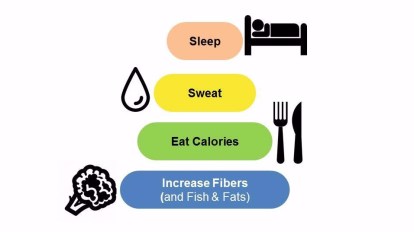
But could this approach be too simple, disregarding the need for protein or other nutrients?
Given that greater than 60% of adults achieve optimal protein requirements and 90% are getting enough of most vitamins and minerals, compared with less than 18% who meet the recommendations for vegetables and fruits, the priority becomes clear: We need to increase our vegetable and fruit consumption.
Time for action
While simple in word, putting this message into action will prove to be a greater challenge. A combined effort from public policy makers, healthcare systems, and the private sector may be the most effective way to enable large populations access to healthier, affordable food options.
Until a time comes when these entities collectively commit to reducing the rates chronic disease rather than catering to corporate interests, individual health advocates and effective grassroots tools that support healthy behaviors and encourage more consumption of vegetables and fruits are left to solve the problem.
As a first step, a clear message needs to be created and consistently communicated. The time is not to sell more diets and protocols that add to the confusion on how to get healthy. Forget counting calories and eliminating foods and let’s bring enjoyment back to eating & health with a simple, easily adoptable message.
To do this, focus on one step to improve health: Include one or more heaps of vegetables and fruits to your meals each day.
Now go and spread the message.
 The Healthy Pharmacist
Leave a comment