
Concerned about my skin in high school, I sought out multiple dermatologists to help control my socially-demoralizing blemishes. After a some doctor-shopping, one seemingly eager dermatologist provided an opportunity to clear away and prevent breakouts by using the antibiotic tetracycline. Excited about its potential, I happily took the prescription. Unfortunately, as a pubescent boy typically is, I was naive to the consequences–especially regarding antibiotic use–and have suffered significant medical sequelae as a result.
Tetracycline is often used to kill the bacteria involved with inflammatory acne but the problem with any antibiotic is its off-target effects. This means it kills both the offending bugs and the harmless ones. The implications of this widespread massacre are not fully known, but include the increase of antibiotic resistance and other negative outcomes.
To help clear my skin, I took tetracycline daily for a few months but instead of seeing less breakouts, I began to experience severe, unexpected heartburn.
This pain continued intermittently even after I stopped the antibiotic, as if it created some enduring change in me. Chalky, fruit-flavored TUMS became my new best friend.
The cough in the coal mine
A couple years later, I developed a persistent, dry cough to the point where I needed medical care. I was referred to a respiratory specialist who tested for asthma and other lung problems and deemed I had nothing he could find wrong.
Unable to solve the problem, I continued along my healthcare journey where a different, more astute doctor asked if I had been having heartburn. Indeed I was, I told him. He suggested that maybe the stomach acid regurgitation during my heartburn was rising to my throat and windpipe, eroding the skin of both, making me more likely to cough. With this diagnosis, he put me on a strong dose of a proton-pump inhibitor, omeprazole, designed to limit the production of stomach acid, and hopefully cure my cough.
Within a month, my heartburn and cough were gone, practically confirming the astute doctor’s thought. While I was thankful to no longer cough, I wondered why was I producing so much more acid now in my life, whereas I never had before.
One explanation may be found by looking at the bacterium Helicobacter pylori, the guy known for its causative role in stomach ulcers, which has a unique evolutionary role to limit stomach acid production. For most of recent history, this bug was demonized and eradicated given the opportunity. One of the drugs used kill this bacterium is also used for acne, tetracycline. Given the remarkable timing of my heartburn following my acne prescription, I’m convinced tetracycline caused my heartburn issues because it killed an essential, acid-reducing microbe.
Even after my cough had been cured, my heartburn continued and I was unable to remove the daily use of my acid-suppressing drug and for four years was dependent on its effects. But at the age of 23, I feared continuing this medication for the rest of my life and began to search for other potential ways to manage my reflux.
No dairy, no problem
Around this time, the anti-gluten fad was peaking which linked nearly every human ailment to wheat. Naturally, I bought in and removed wheat, thinking I could taper off my pills and be heartburn-free. Sadly, the fad diet flopped as the pain never diminished but the idea that foods could be contributing to heartburn persisted. I read about other acid-inducing foods and continued on with my elimination diet.
Food by food was removed until I stumble across a very adamant article about the evils of dairy. With little left to lose, I removed cheese, butter, yogurt, and milk from my diet (sadly I loved cheese). Within one month though, my reflux diminished and my pills were slowly tapered off.
Without consuming much dairy over the last 10 years, I’m still heartburn and pill-free. Dairy was the culprit.
I could sit here and preach the avoidance of dairy for good health, but instead of broadly demonizing dairy, my personal experiences taught me that some people can tolerate certain foods that others cannot. I can no longer consume dairy without adverse effects while many others can eat it and be perfectly fine. The news stories and blogs telling you that dairy is bad or that nightshades are inflammatory cannot be generalization for all. No one diet is best for everyone.
Differences in genetics play a significant role in determining what foods are tolerated but a lesser known, significant contributor may be your gut microbes.
Your food-fussy bacteria
In his 2016 New York Times bestselling book, Ed Yong describes the significant effects of microbes on all levels of life from small insects to complex humans. Yong cleverly describes their importance throughout evolution and how their removal from our environment through use of preservatives and antibiotics may be contributing to our increasing ills. In a seamless fashion, he also describes how bacteria contained in our gut can determine whether our immune system reacts too strongly to an invading pathogen or what foods can get digested and absorbed. Certain bacteria have been shown to turn on certain genes that can allow for digestion of certain foods.
Understanding the profound effects bacteria can have on our bodies, our immune systems, and our digestion, I now fully believe my allergy to dairy was due to the disruption of my internal ecosystem through the removal of H. pylori with tetracycline.
I may not be the only one certain of these consequences. Martin Blaser MD, Director of the NYU Human Microbiome project, has strongly suggested that the increase in antibiotic use in Western cultures is directly linked to the increase in rates of obesity and immune system problems. He even articulates the association with H. pylori and reduced incidence of esophageal reflux.
Data now overwhelmingly show that the bacteria within and on us have a direct and strong influence on our immune system and that antibiotics and other lifestyle factors can influence these bacteria, also affecting our health.
What can we do to improve our microbiome?
News of our modern, industrial world paint a grim picture for our symbiotic bacteria and health. Currently, many efforts are underway to understand the implications of a changing microbiome and develop strategies that reintroduce lost, beneficial species. Below, I briefly describe a few of these strategies and provide my own evidence-based perspective.
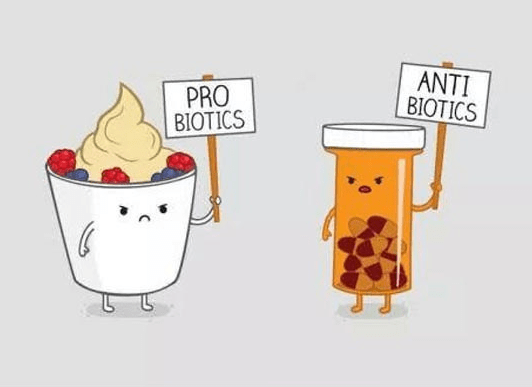
Probiotics: The human gut contains trillions of bacteria with hundreds of different species. To think a few insignificant species contained in a probiotic can produce profound health benefits is naive. The bacteria they contain are usually just the easiest to grow and get past the stomach acid. Unfortunately, even if the probiotic does pass the stomach, they don’t take up residence and colonize the gut and instead, pass right through. On the bright side, there is some evidence they have mild beneficial effects along the journey. My verdict: Mostly useless but may be helpful if you can afford it, especially if you are on antibiotics.
Fecal transplant: For people who have serious gut infections like clostridium difficile where the ecosystem within the intestines is grossly imbalanced, fecal transplants have shown tremendous success. But in other diseases like inflammatory bowel, the results are much more mixed. The problem may be that early in life, the bacteria and immune system are finely tuned together and trying to alter what the immune system co-developed with may come with rejection. Applying this method to other diseases may prove equally challenging. My verdict: Unless you have a serious gut infection, there isn’t enough data to support transplants in otherwise healthy individuals.
Pregnancy/Lactation: One of the best ways to get an ample dose of essential bacteria is during birth and breastfeeding. Unfortunately, this may be too late for most of us, although for those considering starting a family, these two actions are key for a healthy microbiome and immune system. Passing through the vaginal canal and continuing to receive nutrients via breast milk is an irreplaceable way to colonize and feed a starting symbiotic ecosystem. My verdict: Vaginal births and breastfeeding are essential for long term health.
Food: Food is a prebiotic and provides nutrients needed for both you and your bacteria to thrive. Certain bacteria like to eat certain foods and flourish when specific nutrients are abundant. Drastic changes in the gut microbiome can occur in as little as two weeks depending on the quantity of vegetables or meats you consume. Feeding them with more fibrous foods can select for more beneficial microbes and positively impact your health. My verdict: Eat more fibrous fruits and veggies, less meat.
Individuality in each of us
Because each of us has a unique mix and composition of gut bacteria, we may tolerate certain foods others cannot. This variation makes it impossible to generalize one specific diet or food for a broad population.
So are nightshades inflammatory and dairy stomach-acid promoting? I cannot tell you with certainty. Instead try it, eliminate it, and reintroduce it. Do you feel better or worse?
Then you’ll have your personalized diet, thanks to the friends living in your gut.
 The Healthy Pharmacist
Leave a comment