

This past month, astonishing results of an experimental treatment for Alzheimer’s Disease (AD) were published in one of the most prestigious scientific journals, Nature.
The drug, called aducanumab, is the first therapy to show such positive data in reducing the progression of AD.
While this news is very encouraging for a population of nearly 14 million that may one day develop dementia, evidence is building to support lifestyle changes as a way to avoid the disease all together.
AD comes like a tidal wave, appearing at distance and barreling down with little that can be done to stop its progression. Eventually reaching shore, it comes crashing down, robbing one of their identity and function, relentlessly washing away life’s most cherished memories.
Currently, seeing the wave coming is difficult since no widespread test is available to track the disease progression, as one can in diabetes with blood glucose. But even if tracking were possible and AD was diagnosed early, it would bring little comfort as there are no available drugs to change the disease. Instead, many hope in fear that the wave doesn’t reach the shore of the mind.
The silver lining to such a wave is that early preparation to limit the ensuing destruction, ultimately improves the entire coastal infrastructure. With enough time, seawalls can be built and structures can be stabilized, readying the whole system for impending danger. Similarly, if given advanced warning, the inevitability of AD can be altered through preventative healthy behaviors which end up protecting the brain and preserving its memories.
In fact, a warning does exist as changes in the brain relating to Alzheimer’s are thought to begin 20 years before symptoms appear. Over these decades, the trajectory of the disease is shaped for the better or worse; health and wellness can drastically alter the trajectory for the better.
With enough dedication to healthier habits early in life, the tidal wave of AD can be changed to a perfect wave for boogie boarding.

The cause of AD
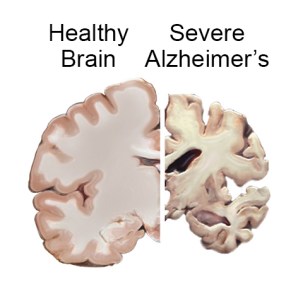
Alzheimer’s Disease is one of the most common forms of dementia and is confirmed after amyloid plaques are found within the brain. The plaque-forming amyloid proteins can cause direct death of neurons and promote inflammation in the brain but its exact role in AD isn’t fully understood.
For years, drug companies believed amyloid in the brain directly caused AD. But after many attempts to design drugs that remove the substance have proven not to slow the disease, this theory has been questioned. Maybe they’ve got it all wrong and amyloid is merely the end result of another underlying problem. Indeed another protein called tau has been shown to correlate more with clinical symptoms; treatments targeting tau are currently under development.
I believe the problem is even deeper than the accumulation of proteins and that dementia represents an even more complex problem of health and cellular homeostasis. Unfortunately, it is hard to target such pathways without serious health consequences so pharmaceutical companies have mostly steered clear of this approach. Instead, they more simply target the protein plaques that build up.
Their longstanding approach includes: 1. stopping the production of amyloid or 2. removing the build up of it.
Think of pharma’s approach to AD like a faucet that is turned on full blast with a sink that’s plugged up. The water will eventually overflow the sink and damage the floor. To stop the damage, you can either stop the water production by turning off the faucet or remove the water by mopping the floor continuously. This is a similar thought in AD with the water being the amyloid and the floor being your brain.
Luckily the human body is smarter than pharma and has been designed to stop and remove the plaque, under ideal conditions.
1. Stop the production
Most cases of AD that are linked an overproduction of amyloid are found in individuals with a genetic mutation in the way amyloid is produced. This occurs in people who have PSN mutations and APOE4 alleles which causes them to produce too much amyloid and develop dementia at an early age.
Some therapies under development aim to stop production of amyloid and with less amyloid, less neuronal death is thought to occur.
But in nature, it’s usually never a good idea to fully stop something that once held a prominent biological purpose in multiple different species. Indeed, amyloid has been thought to assist the immune system in the brain and trap invading bacteria.
2. Remove it
In a healthy state, the human body normally removes damaged proteins and cellular debris through a process called autophagy; literally the eating of the self.
As one ages, this process slows and cellular debris, including amyloid, can build up. When it does, plaques may form and eventually kill neurons. Thus, it is thought that we may need extra help removing amyloid in our later years.
The drug aducanumab, described in Nature, is thought to work by binding to these amyloid proteins, signalling the immune system to come and remove them.
But instead of waiting years for a therapy to become available, actions can be taken now to reduce the accumulation of amyloid in the brain and protect neurons from other toxins.
Reducing dementia without drugs
The hope of a potential therapy to limit the progression of the AD once it occurs is encouraging, but given the brain-related changes of AD beginning 20 years before symptoms, there is a much needed emphasis to prevent the formidable tidal wave from reaching shore in advance. Luckily, there are easy habits that can reduce the risk of developing AD.
1. Sleep
I think of sleep’s role as the weekend is to the work week. It’s a time to recuperate and perform activities that were pushed aside during the week, like cleaning. And evidence shows that’s exactly what sleep does for your brain.
In most parts of the body, damaged tissue is swept away through the use of the immune system’s lymphatic channels.
In the brain, it was once thought these channels didn’t exist and instead the brain relied on sleep as a means for toxins to be cleared. During sleep, brain cells were found to shrink, opening pathways for fluids to flow around neurons and wash the brain. Although an ill-defined lymphatic system was recently discovered in the brain, the act of sleep still increases toxin removal.
Summary: To reduce toxins and protein causing plaques, be sure to get 7-8 hours of sleep.
2. Low starch/sugar (easy carbohydrates)
Alzheimer’s disease is becoming known as Type 3 Diabetes and studies have linked the damaging effects of high blood sugar to impaired brain function.
One way a high carbohydrate diet may damage the brain is directly due to high levels of sugars in the blood. Excessive glucose can overwhelm cellular mitochondria and directly elevate the production of reactive oxygen species which in turn increase inflammation and result in damaged brain cells and impaired brain function.
Another way occurs through the resulting insulin increase from a carbohydrate-rich diet. In normal conditions, insulin can improve memory. But when insulin is elevated, levels of inflammation and amyloid increase, potentially increasing the risk of AD over time.
Summary: Minimize damage to brain cells by limiting simple starch/sugar consumption.
3. Exercise
Aging changes the brain in multiple ways that contribute to brain atrophy and cognitive impairment.
Exercise can counter many of these late-life changes, by reducing the accumulation of amyloid and improving its clearance through mechanisms including autophagy. Just like exercise boosts energy levels, it also boosts and strengthens cellular stress-response pathways in the brain, making future injuries less severe and toxins less damaging.
Summary: Exercise will make you and your brain more resistant to age-related stressors.
Act Now
A treatment for AD is years away and is still potentially 20 years too late.
We are not bound to a future fraught with memory impairment and instead, hold the power to improve our brain health through the lifestyle choices we make each day.
Build your seawall decades in advance. You’ll remember to thank yourself that you did.
 The Healthy Pharmacist
Leave a comment